





Conflict is a natural part of working together. When people bring different perspectives, priorities, and experiences, tension is inevitable. What matters most is not whether conflict happens, but how it is handled. When approached constructively, conflict can strengthen collaboration, improve decision making, and build psychological safety across teams.
Conflict resolution in the workplace is not just about preventing tension. When handled well, conflict can strengthen collaboration, improve decision-making, and build psychological safety across teams.
Conflict at work is inevitable. Whether it stems from miscommunication, competing priorities, or personality differences, tension in the workplace isn’t a sign of failure, it’s a sign that people care enough to engage. The real issue isn’t the presence of conflict, it’s how it’s handled.
Although workplace conflict is common, many leaders don’t feel comfortable handling it, especially with colleagues. As a business leader, you’ll likely clash with other managers and need to help your team work through disputes.
When left unresolved, workplace conflict can quietly erode a team’s productivity, morale, and trust. But when approached skillfully, conflict can be a powerful catalyst for growth, collaboration, and innovation.
The True Cost of Workplace Conflict
We often underestimate the toll conflict takes, not just emotionally, but financially and organizationally. Research shows that employees spend nearly three hours per week dealing with conflict. Over the course of a year, that adds up to billions of dollars in lost productivity across organizations globally.
Beyond wasted time, conflict leads to:
- Increased stress and absenteeism
- Higher turnover rates
- Diminished team cohesion
- Poorer decision-making
- Damage to workplace culture and psychological safety
Did you know?
- 53% of employees handle “toxic” situations by avoiding them.
- A single averted conversation can cost an organization $7,500 and more than seven workdays.
- American businesses lose an estimated $359 billion each year due to the impact of unresolved conflict including lost productivity, disengagement, and turnover.
The cost of conflict isn’t just about the disagreement itself, it’s about the loss of energy, focus, and trust that results when conflict is mismanaged or ignored.
Why Workplace Conflict Happen
Not all conflict is negative. Some tension is necessary for change and innovation. But conflict becomes destructive when people lack the tools or frameworks to navigate it constructively.
Common causes include:
- Unclear roles and responsibilities
- Differing values or goals
- Ineffective communication
- Perceived inequities or favoritism
- Stressful or high-pressure environments
Without systems in place to address conflict early, small misunderstandings can quickly escalate into larger organizational issues.
A Framework for Conflict Resolution in the Workplace
An effective way to respond to conflict is to use a framework that balances both results and relationships. At Inclusivity, we use a Conflict Response Framework designed to help leaders identify how to respond and resolve conflict when it arises, while supporting psychological safety and inclusive decision-making.
The model is built around two dimensions:
Results Focus (Y-axis): Advocacy for outcomes, risk, and results
Collaboration Focus (X-axis): Care for trust, relationships, and psychological safety
These dimensions create five ways to respond to conflict. Each approach can be useful depending on the situation. The goal is not to use one style every time, but to respond intentionally.
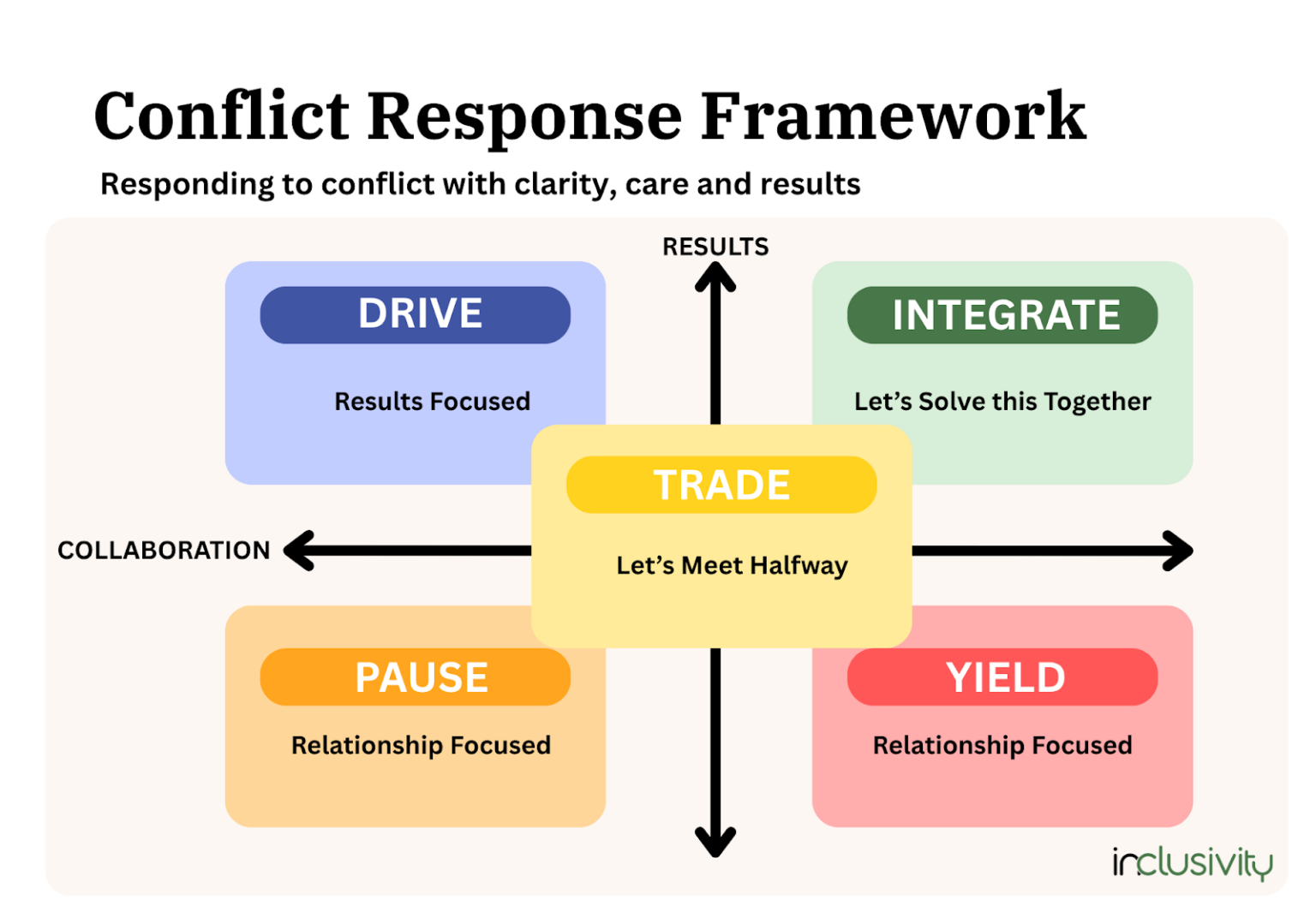
Drive: Results-focused and decisive. Best used when urgency, safety, or accountability matters most. While effective for quick decisions, overuse may silence less powerful voices. Inclusive leaders stay calm, clarify intent, and invite input where possible.
Yield: Relationship-focused and accommodating. Helpful for preserving trust and de-escalating tension. When overused, it can reinforce inequity, especially if the same individuals consistently accommodate. Inclusive practice means noticing who yields most and normalizing respectful disagreement.
Pause: Creates space when emotions are high or information is missing. This allows time for reflection and prevents reactive decisions. To avoid appearing dismissive, name the pause and set a clear return point.
Trade: Focused on compromise and mutual concessions. Useful when time is limited or when a practical solution is needed. Inclusive leaders consider fairness and ensure compromise does not disadvantage those with less power.
Integrate: Balances outcomes and relationships through collaborative problem-solving. This approach seeks shared understanding and sustainable solutions. While it requires time and trust, it builds psychological safety and strengthens long-term working relationships.
Understanding these different approaches helps leaders respond more intentionally, shifting based on urgency, power dynamics, and the needs of the situation. The most effective conflict resolution in the workplace happens when leaders can flex between approaches while maintaining both performance and trust.
Building a Conflict-Competent Workplace Culture
Organizations that thrive through conflict share one key trait: a culture that treats conflict as normal, navigable, and even valuable. Leaders play a central role in setting the tone.
Here’s how you can start:
- Normalize conversations about conflict. Encourage open dialogue and create psychological safety so team members feel heard and respected.
- Train leaders and teams in conflict resolution. Equip people with the language, tools, and frameworks to navigate tough conversations and manage workplace conflict effectively.
- Address issues early. Conflict is easier to resolve when caught early. Avoiding it only lets resentment fester.
- Model constructive leadership behavior. Leaders who stay calm, curious, and solution-focused during conflict set the tone for others to follow.
Conflict is a natural part of any workplace, but how it is handled makes all the difference.
Leaders skilled in conflict resolution set the tone for open communication, trust, and psychological safety. By embracing conflict as an opportunity rather than a threat and building these essential leadership skills, you create a culture where productivity and inclusion thrive together.
The best time to start is before the next conflict arises.
Ready to strengthen conflict resolution skills across your organization?
Inclusivity offers practical conflict resolution training and leadership development programs that help teams navigate difficult conversations, build psychological safety, and create more inclusive, high-performing workplaces.