





How well do you understand what it’s like to work in your organization? As a leader, you have a view of the culture, though some experiences may be less visible from where you sit.
Perhaps the same concerns keep coming up despite efforts to address them. Or feedback from one team sounds quite different from what you’re hearing elsewhere. It can be difficult to know what’s behind those differences and whether they point to something that needs closer attention.
A workplace culture assessment helps you explore those questions. It brings employee perspectives into focus and examines how organizational practices shape their experiences. The findings can help you decide where to make changes and recognize strengths you want to build on.
Here are five signs it may be time to take a closer look.
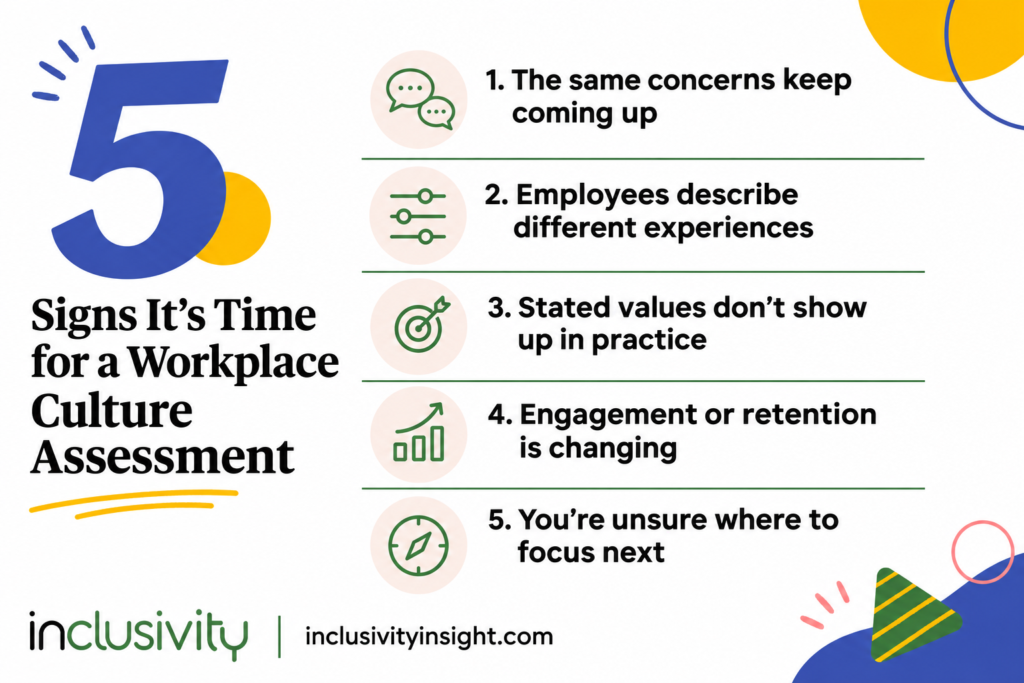
1. The same concerns keep coming up
Perhaps employees repeatedly raise concerns about communication, inconsistent expectations or fairness. You’ve responded with team discussions, training or updated policies, yet similar feedback continues to surface.
Recurring concerns are a reason to look more closely at what’s contributing to the pattern. For example, what appears to be a communication issue might involve unclear decision-making, competing priorities or uncertainty about who is responsible for what.
A workplace culture assessment brings different sources of information together to explore those connections. It can help you understand whether concerns are concentrated in particular areas or reflect broader organizational practices and what response would be most useful.
2. Employees describe very different workplace experiences
Ask several people to describe your workplace, and you may hear very different answers—even when your overall survey scores look positive.
One team might feel comfortable asking questions and challenging ideas, while another might hesitate to raise concerns. Some employees may see clear opportunities to advance, while others feel unsure about how those decisions are made.
These differences matter. In one study, it was found that team psychological safety was associated with learning behaviours, such as discussing problems and seeking feedback. Understanding where people feel able to speak up can therefore offer useful insight into how teams work and learn.
A workplace culture assessment can examine patterns across teams, roles and demographic groups, where confidentiality allows, to better understand who is experiencing the workplace differently and why.
3. Your stated values don’t consistently show up in practice
Your organization may value collaboration, trust and accountability but how consistently do those values shape everyday decisions?
Consider who gets invited into important conversations, how promotions are decided, how leaders respond to mistakes and which behaviours are rewarded. These moments help employees understand what the organization values in practice.
MIT Sloan’s work on organizational culture highlights the importance of examining the gap between how leaders describe their culture and how employees experience it. A shared set of values doesn’t automatically mean a shared experience.
A workplace culture assessment can help identify where your systems and leadership practices reinforce your values, and where adjustments may be needed. It also provides an opportunity to recognize what’s working well and build on it.
4. Engagement or retention is changing, and you’re unsure why
Perhaps employee engagement has declined, turnover has increased or departures are concentrated in particular teams. Exit interviews and survey comments may offer clues, but you’re still missing a clear explanation.
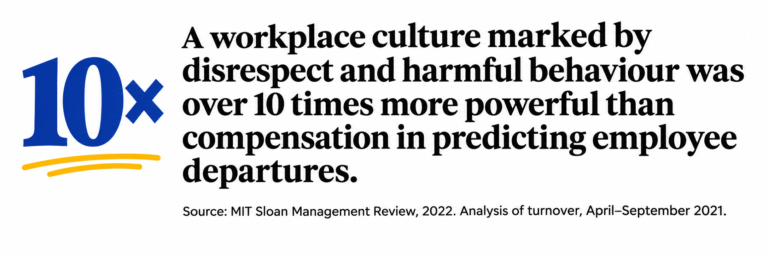
These changes may reflect concerns about workload or compensation, though employees’ everyday experience of the workplace also deserves attention. In a study examining turnover, researchers found that a workplace culture marked by disrespect and harmful behaviour was over 10 times more powerful than compensation in predicting employee departures.
A workplace culture assessment helps explore that context. Bringing together survey findings, employee conversations and existing organizational information can reveal patterns that individual data points don’t explain. For example, concerns about limited career development may warrant a closer look at how opportunities are communicated, how managers support growth or how consistently promotion criteria are applied. Understanding the contributing factors gives leaders a stronger basis for deciding what to do next.
5. You want to improve your culture, but aren’t sure where to start
Your leadership team is committed to improving the culture, and employees have shared ideas about what could help. There may already be initiatives underway, but it’s difficult to determine which actions would make the greatest difference or how they fit together.
One challenge we often hear from clients is how to balance employee (or committee) enthusiasm with organizational priorities and available resources. Individual initiatives often gain momentum because someone champions them, though the work can lose direction when that person leaves or takes on other responsibilities.
A workplace culture assessment provides a foundation for deciding where to focus. It helps you understand what needs attention and where existing efforts are working well, so you can agree on priorities that reflect your organization’s needs. From there, you can develop a practical plan that connects these efforts to the organization’s goals and builds them into everyday practices. Clear responsibilities help sustain the work, while measures of progress allow you to see whether your efforts are making a difference.
A clearer understanding of your culture starts with listening
You don’t need to wait for a major problem to assess your workplace culture. Taking the time to understand employees’ experiences can help you recognize what’s working well and make informed decisions about where to focus next.
The purpose is to give your organization a shared understanding of employee experiences and the practices shaping them, so you can move forward with greater confidence.
At Inclusivity, we help organizations understand their culture through surveys, consultations, a review of internal materials and analysis. We translate those findings into practical recommendations that support stronger, more inclusive and high-performing workplaces.
If you’re considering your next steps, explore our workplace culture assessment services. We’re here to help you understand where you are and where to focus next.