





How everyday interactions shape psychological safety at work, workplace trust and whether people feel comfortable speaking up at work.
Most of us can probably think of a time when we had something to say at work and decided not to say it. Maybe it was a question we thought we should already know the answer to, a concern we weren’t sure would be well received, or simply a different perspective than others.
So what makes it easier to speak up in some situations and harder in others? Often, it’s not just about what we have to say but also about what we’ve learned, through experience, about how our contribution is likely to be received.
Imagine Two Meetings…
In one meeting, someone questions an idea the team is discussing. The manager quickly defends why the decision makes sense, dismisses the question and the conversation moves on, leaving a noticeable sense of discomfort within the group.
In another, someone raises a concern and the response is, “Tell me more about what you’re seeing.” The group spends some time exploring it and a few others add their perspectives. They may ultimately stick with the original direction, but the experience of contributing feels different.
Neither interaction may seem especially significant on its own, but both send a message. We learn from how people respond when someone asks a question, disagrees, makes a mistake or raises a concern. We also learn by watching what happens to other people when they do the same.
Everyday interactions add up
Over time, everyday interactions can shape whether we feel comfortable sharing an idea, asking for help, offering a different perspective or saying when something doesn’t feel quite right. They can also influence how much of ourselves we’re willing to bring into a conversation and how much we choose to hold back.
That’s part of what makes trust and psychological safety at work so important. They aren’t created through one big moment or a statement about having an “open door.” They’re built through the way people respond to one another, especially when someone takes a small risk by speaking up.
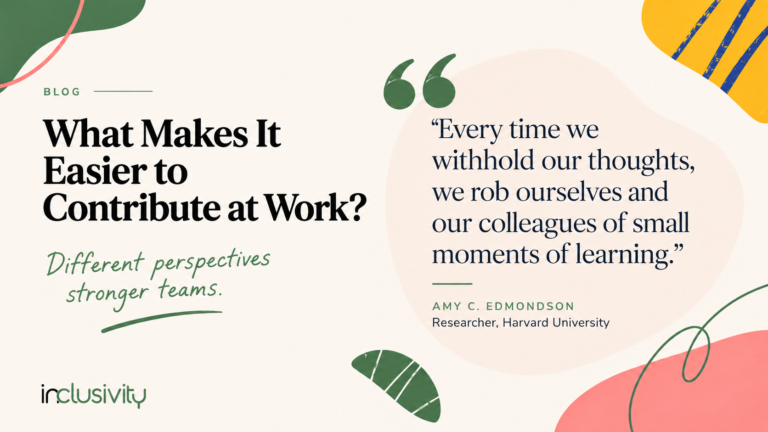
Creating Space to Contribute
So what can this look like in practice? It might be a colleague who asks a follow-up question rather than immediately disagreeing, a manager who can say, “I hadn’t thought about it that way,” or a team that responds to a mistake by focusing on what can be learned. It can also be noticing when someone has been interrupted and making space for them to finish their thought, or showing genuine curiosity when someone sees something differently.
The opposite can have an impact too. When questions are quickly dismissed, people become defensive when challenged, or mistakes are met with blame, it can make someone think twice about contributing the next time. Even more subtle things, like whose ideas get explored, who gets listened to, or how people respond when someone asks for help, can shape how comfortable people feel participating.
Leaders have an important role in creating an inclusive workplace culture where people feel able to contribute, but it isn’t only about leadership. We all contribute through the way we listen, respond and make space for one another. These choices can help build the trust that makes it easier for people to ask questions, share ideas, raise concerns and bring different perspectives into the conversation.
Take a Moment to Reflect
Thinking about our own experiences can help us notice what creates trust and openness, as well as what can get in the way. Consider these two questions:
- Think about a team or workplace where it felt relatively easy to contribute, ask questions or offer a different perspective. What were people doing that made that possible?
- Now think about what can cause someone to hold back or hesitate. What signals might tell them that contributing carries risk?
Creating spaces where people feel able to contribute isn’t just about what we say we value. It’s shaped by what we do in the everyday moments when someone asks a question, shares an idea, makes a mistake or sees something differently.
Continue Your Learning
Explore psychological safety at work and learn more about creating workplaces where people feel comfortable speaking up, sharing ideas and contributing.