



Psychological safety at work has become one of the most widely used ideas in conversations about workplace culture, leadership, and performance. Yet despite its popularity, many organizations are still unclear about what psychological safety actually means and how it differs from other important concepts such as inclusion and mental health.
This lack of clarity matters. When leaders misunderstand psychological safety, they often invest energy in the wrong solutions. Real progress begins with a shared understanding of what psychological safety is, what it is not, and how it is intentionally built inside organizations.
Understanding the difference between safety, inclusion, and mental health
Psychological safety, inclusion, and mental health are deeply connected. However, they are not interchangeable.
Psychological safety refers to an environment where people can take interpersonal risks without fear of punishment, humiliation, retaliation, or identity-based harm. It is shaped by leadership behaviour, organizational systems, and everyday workplace norms.
Inclusion is the relational experience of being valued, respected, and meaningfully involved in decisions, opportunities, and social connection at work. Mental health, by contrast, reflects an individual’s emotional wellbeing, resilience, and ability to function in daily life.
These distinctions are important because each calls for a different response. Building psychological safety requires intentional design of leadership practices and organizational systems. This is where effective psychological safety training becomes essential.
Safety comes before belonging
Human needs follow a clear sequence. Basic physiological and safety needs must be met before people can fully experience connection, belonging, and purpose.
In workplaces, this means people cannot truly feel included if they are constantly managing fear. They may remain silent in meetings, avoid sharing concerns, or hesitate to challenge ideas. Without safety, belonging stays superficial. With safety, belonging becomes possible.
For leaders, psychological safety is therefore not a culture initiative. It is a foundational responsibility.
Psychological safety at work is often misunderstood
Many organizations believe they are creating psychological safety when they are actually reinforcing conditions that limit honesty and learning.
Common misunderstandings include the belief that psychological safety means being nice, avoiding disagreement, protecting people from feedback, or steering clear of difficult conversations.
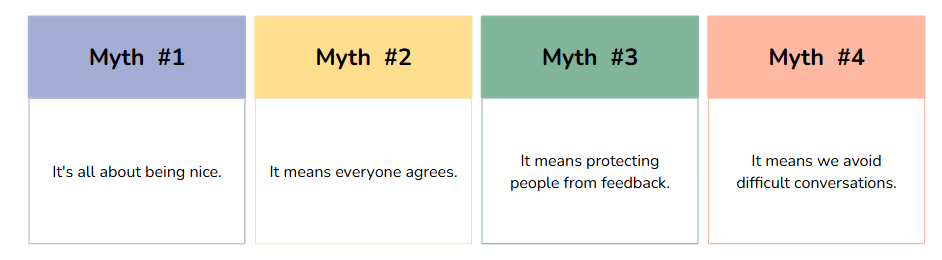
In reality, psychologically safe environments make room for respectful conflict, clear accountability, and honest dialogue. People can challenge ideas, surface risks, and engage in meaningful conflict resolution without fear of interpersonal harm. This is why conflict resolution training and feedback training are closely connected to psychological safety. When people learn how to navigate disagreement constructively and how to give and receive feedback with clarity and respect, safety and performance grow together.
Safety is designed, not assumed
“Psychological safety is not accidental. It is intentionally designed through leadership, systems, and everyday behaviours.” – Wyle Baoween
One of the most important shifts in thinking is recognizing that psychological safety does not emerge from good intentions alone. It must be intentionally built.
The same principles that guide physical safety apply to interpersonal safety. Organizations encourage people to report hazards, remove retaliation, and design systems that prevent harm. These same principles must guide how workplaces support voice, learning, and challenge.
Psychological safety training plays a critical role here. It helps leaders and teams move beyond awareness into practical capability. This includes learning how to respond to mistakes, how to invite dissenting perspectives, how to manage conflict productively, and how to create feedback cultures that support growth rather than fear.
Psychological safety is not experienced equally
Safety is not distributed evenly across workplaces. Identity, power, status, and histories of exclusion all shape how safe someone feels speaking up and how their voice is received.
Because of this, building psychological safety requires more than universal messaging. It requires attention to lived experience, equity, and the dynamics that influence whose ideas are welcomed and whose concerns are minimized.
Who is responsible for psychological safety
Responsibility for psychological safety is shared, but accountability begins with leadership.
- Leaders set expectations, model vulnerability, address harm, and remove retaliation.
- Systems establish feedback channels, enforce policy, and monitor equity.
- Teams shape everyday norms of respect, interruption, and inclusion.
- Individuals influence how they challenge ideas, respond to feedback, and contribute to culture.
When these layers align, psychological safety becomes sustainable rather than situational.
Key ideas to carry forward
As organizations move from awareness toward meaningful action, a few core truths about psychological safety are worth remembering:
- Psychological safety is the freedom from interpersonal harm.
- Safety must come before belonging can fully develop.
- Safety does not happen by accident. It must be intentionally designed.
Organizations that invest in psychological safety training, conflict resolution training, and feedback capability create environments where people can speak honestly, learn continuously, and contribute fully. These are the conditions that support inclusion, wellbeing, and long-term performance.
This article is based on the webinar “Psychological Safety at Work: Are We All Talking About the Same Thing?” hosted by Inclusivity in February 2026.
Build a culture where people feel safe to contribute and perform
Creating psychologically safe workplaces requires more than awareness. It takes practical skills, strong systems, and intentional leadership to create environments where people can speak honestly, collaborate effectively, and contribute at their full potential.
Inclusivity partners with organizations to build inclusive, high performing teams through:
Targeted training:
- Psychological safety training
- Conflict Resolution training
- Giving and Receiving Feedback Training
Insight and assessment
- DEI assessments to understand culture, systems and employee experience
- Employee engagement surveys to deepen understanding of employee experience and identify barriers to safety, belonging, and performance
Connect with our team to explore how we can support psychological safety and inclusive culture in your organization. [email protected]