




A leadership guide to building psychological safety at work
Psychological safety has become one of the most important factors in high performing teams and health workplace cultures. Research consistently shows that when people feel safe to speak up, share ideas, ask questions, and admit mistakes, teams collaborate more effectively and make better decisions.
Google’s well known Project Aristotle study, which examined what makes teams successful, found that psychological safety was the single most important factor behind high performing teams.
Psychological safety does not mean avoiding accountability or difficult conversations. Instead, it describes a workplace environment where people feel comfortable contributing fully without fear of embarrassment, punishment, or negative consequences.
For organizations navigating change, innovation, and increasing complexity, psychological safety is not a “nice to have.” It is a core leadership capability. This is why many organizations are investing in psychological safety training for leaders and managers helping them develop the behaviours that create trust, openness, and healthy team dynamics.
The good news is that psychological safety is not created through policies alone. It is built through everyday leadership behaviours.
This article looks beyond listing dates and instead focuses on what diversity months actually represent, why they matter in the workplace, and how organizations can use them to support inclusive, high-performing cultures.
Here are five behaviours that help leaders build psychological safety on their teams.
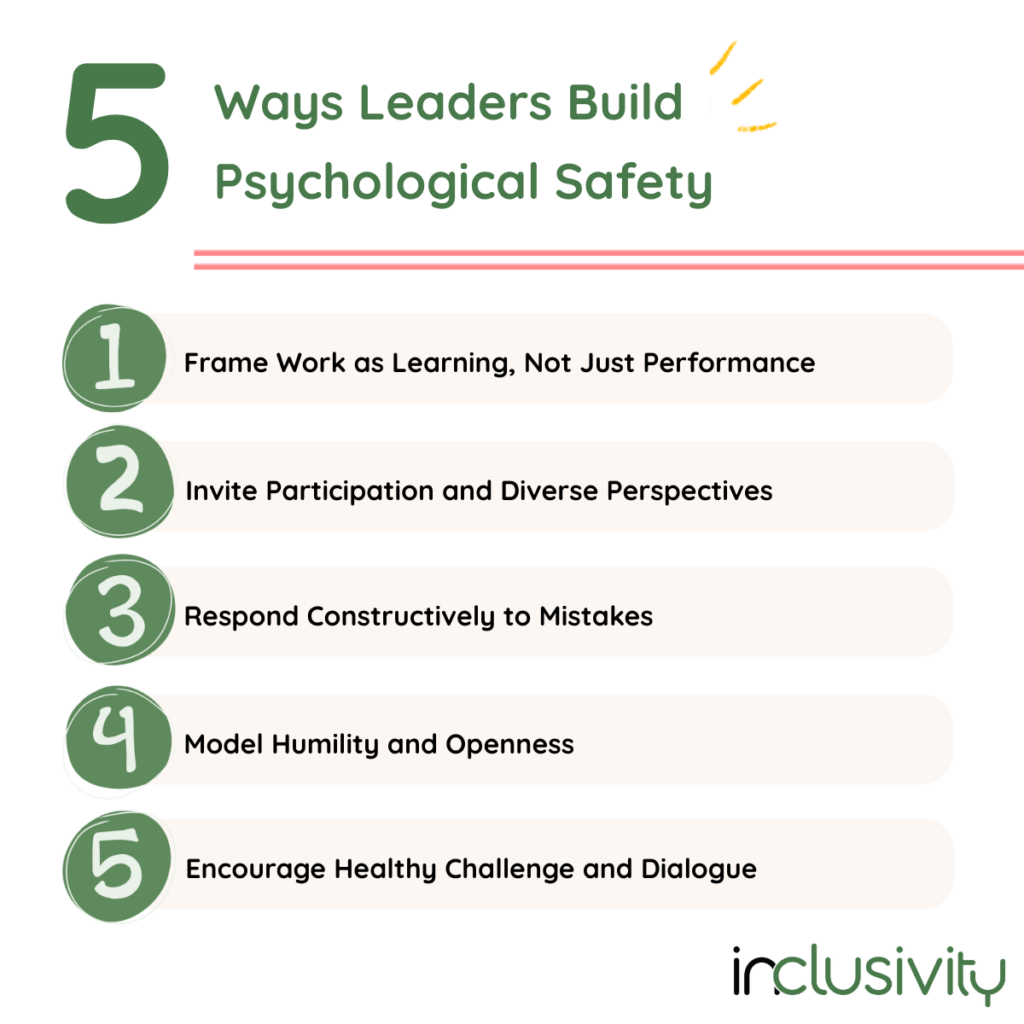
1. Frame Work as Learning, Not Just Performance
Psychologically safe teams treat work as a learning process.
Leaders acknowledge that complex work involves uncertainty and that improvement often comes through experimentation and feedback. This does not mean lowering standards. It means creating space for reflection and learning alongside accountability.
Leaders can reinforce a learning mindset by asking questions such as:
- What are we learning from this project?
- What might we try differently next time
- What risks or challenges should we surface early?
When teams see that learning is valued, people are more willing to share insights and raise issues before they become bigger problems.
2. Invite Participation and Diverse Perspectives
One of the strongest drivers of psychological safety is whether people feel their voices matter.
Leaders who actively invite participation create an environment where team members feel encouraged to contribute ideas, ask questions, and challenge assumptions. Without this intentional effort, conversations can easily be dominated by a few voices while others remain silent.
Simple leadership behaviours that encourage diverse perspectives can include:
- Asking quieter team members for their perspectives
- Inviting alternative viewpoints or disagreement
- Acknowledging when someone raises a new idea or concern
When leaders consistently demonstrate curiosity and openness, they signal that different perspectives are welcome and valued. This is particularly important for inclusive workplaces, where psychological safety helps ensure that people from different backgrounds and experiences feel able to contribute fully.
3. Respond Constructively to Mistakes
How leaders respond when something goes wrong sends a powerful signal to the team.
If mistakes are met with blame or embarrassment, people quickly learn that it is safer to stay quiet. But when leaders respond with curiosity and problem solving, they create space for honesty and learning.
Psychological safety does not mean ignoring mistakes. Instead, it encourages teams to surface issues early so they can be addressed before they escalate.
Leaders can support respond constructively to mistakes by:
- Thanking people for raising concerns
- Focusing on what can be learned rather than who is at fault
- Discussing improvements openly after a setback
Teams that can talk about mistakes openly often learn faster and perform better over time.
4. Model Humility and Openness
Psychological safety starts with leadership behaviour. When leaders demonstrate humility and openness, it makes it easier for others to do the same.
Leaders who admit they do not have all the answers, ask for feedback, or acknowledge their own mistakes create a powerful signal. They show that the workplace values learning and honesty rather than perfection.
Some simple ways leaders can model humility and openness include:
- Asking “What am I missing?” during discussions
- Inviting feedback on decisions or plans
- Acknowledging when they have learned something new from their team
These behaviours humanize leadership and reinforce the idea that everyone on the team is contributing to shared learning.
5. Encourage Healthy Challenge and Dialogue
Psychological safety is sometimes misunderstood as keeping conversations comfortable. In reality, it enables more honest and productive debate.
When people feel safe to challenge ideas respectfully, teams make better decisions. Diverse perspectives are explored, risks are surfaced earlier, and innovation becomes more likely.
Leaders play an important role in normalizing constructive challenge. They can do this by:
- Framing disagreement as part of strong collaboration
- Encouraging respectful questioning of ideas
- Ensuring that different viewpoints are heard before decisions are made
Healthy debate, when combined with trust and respect, strengthens team performance.
Psychological Safety and Inclusive Workplace Culture
Psychological safety is closely connected to inclusive leadership and workplace culture. When people feel safe to speak up and contribute their perspectives, teams are more likely to benefit from the full range of experiences and ideas within the organization.
For this reason, many organizations are now integrating psychological safety training into leadership development programs, particularly for people leaders and managers. Training can help leaders recognize the behaviours that influence team dynamics and build the practical skills needed to foster open, high trust environments.
Building psychological safety does not happen overnight. But when leaders consistently demonstrate curiosity, humility, and openness, they create teams where people feel empowered to contribute fully. And when people feel safe to speak up, organizations are better positioned to learn, adapt, and succeed.
Interested in building psychological safety on your teams?
Inclusivity offers workshops and leadership training that help managers develop the practical skills needed to foster trust, encourage open dialogue, and create high performing, inclusive teams.