




Awareness is important, but real change comes from building structure into the hiring process.
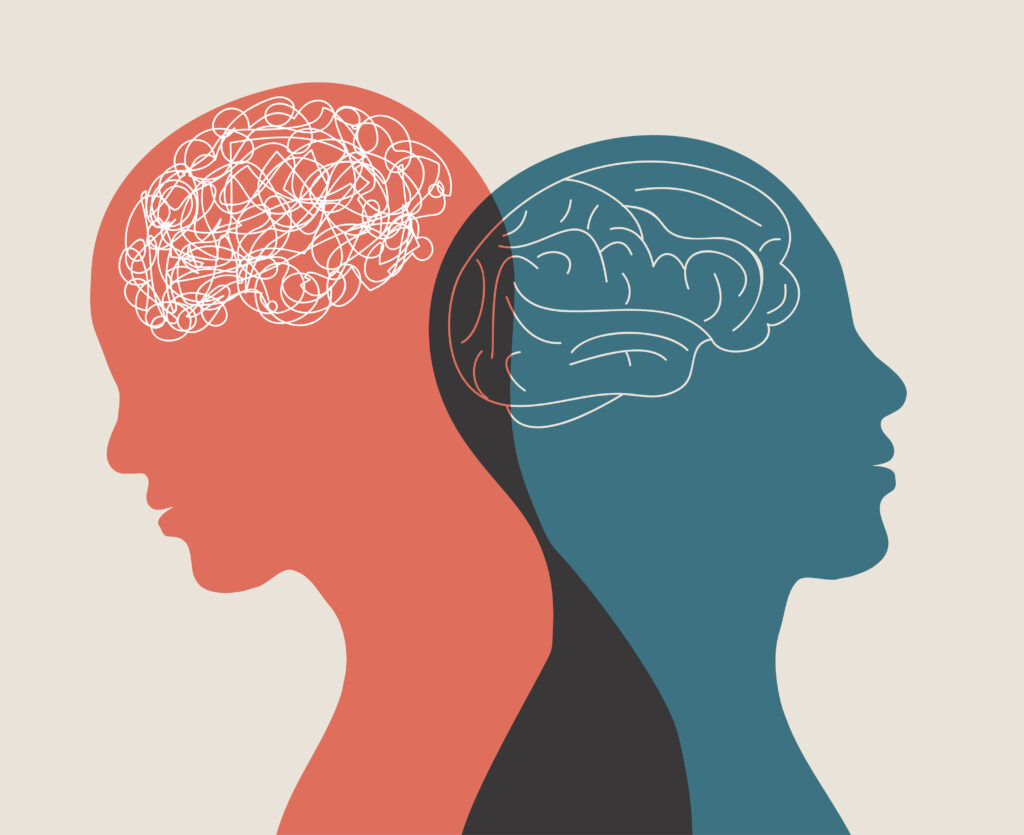
Hiring is one of the most powerful levers an organization has to build strong, diverse, high-performing teams. Yet even the most well-intentioned hiring processes can be quietly shaped by unconscious bias — the automatic, often invisible associations that influence how we perceive, evaluate and select candidates.
Unconscious bias doesn’t just affect fairness. It affects decision quality. When bias shapes assessments of who is “qualified,” “professional,” or a “good fit,” organizations risk missing out on exceptional talent and narrowing the diversity of perspectives that drive innovation.
How Unconscious Bias in Hiring Shows Up
Bias is not only individual, it also shows up in the systems and processes organizations build. Research and practice show several predictable patterns:
- Affinity bias: Preferring candidates with similar backgrounds or experiences (“They worked in banking like I did, I think they’ll fit right in”).
- Name and language bias: Making assumptions about a candidate’s capability or cultural fit based on their name, accent or communication style.
- Contrast bias: Comparing candidates to one another instead of consistently evaluating them against the criteria.
- Halo/horn effect: Allowing one positive or negative trait to overshadow the full picture (“She has a great handshake, so she must be strong overall”).
- Performance and systemic bias: Overestimating the potential of dominant groups while underestimating underrepresented groups, patterns reinforced by systemic inequities.
These biases operate quickly and unconsciously, influencing everything from resume screening to interview impressions to final decision-making. Even the language we use, “gut feeling,” “not the right fit,” “look the part”, can signal bias-based reasoning.
Why It Matters
Bias in hiring does more than impact individual candidates. It shapes the composition of entire teams and organizations. Less diverse teams tend to be less innovative, more prone to groupthink, and more likely to miss opportunities. Conversely, when hiring processes are equitable and well-designed, organizations not only find stronger talent they improve productivity, decision-making and long-term performance.
Mitigating Bias Through Better Systems: 5 Practical Steps
Awareness is important, but real change comes from building structure into the hiring process. The most effective approaches embed fairness directly into how decisions are made.
- Use consistent, structured interviews. Ask all candidates the same questions, focused on skills and potential, not personal impressions.
- Establish clear decision criteria. Create evaluation rubrics before interviewing begins. This reduces reliance on intuition — and makes decisions more transparent.
- Expand the definition of a strong candidate. Consider both experience and potential. “Fit” should mean alignment with values and capability, not similarity to existing team members.
- Diversify who participates in hiring. A broader set of interviewers reduces the influence of any one person’s bias and supports more balanced decisions.
- Slow down where decisions move fast. Bias thrives under pressure. Pausing for reflection before evaluating candidates, even briefly, improves accuracy and fairness.
Considerations throughout the hiring process:
Strengthening fairness in hiring starts with examining each stage of the process and identifying where bias may influence decisions.
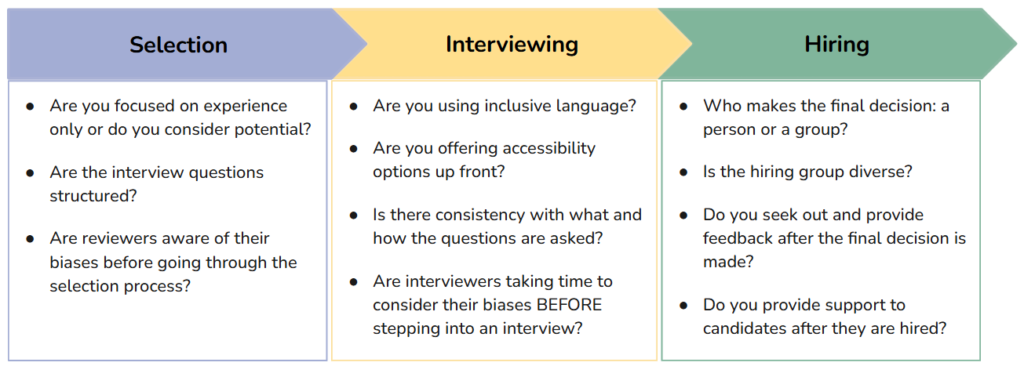
By consistently reflecting on these questions, organizations can build hiring processes that are fair, inclusive and better at identifying top talent.
Building a More Inclusive Talent Pipeline
Organizations that intentionally reduce bias in hiring are better equipped to reflect the diversity of their communities and customers. They also send a clear signal to prospective employees: talent is recognized fairly, consistently and with integrity.
Creating an equitable hiring system isn’t about perfection, it’s about intention, transparency and ongoing improvement. And the payoff is significant: stronger teams, better decisions and a more inclusive workplace where a wider range of people can thrive.
References:
- Knight, R. 7 Practical Ways to Reduce Bias in Your Hiring Process. Harvard Business Review.
- Fuller, Pamela. The Leader’s Guide to Unconscious Bias.
- Bloomberg/Harvard data on bias in evaluation and decision-making.
- Studies on affinity bias, name bias and performance bias in hiring (McKinsey, SHRM, and peer-reviewed journals).